
Chinese Pertner Insititutions
All Colleges
Beijing Foreign Studies University
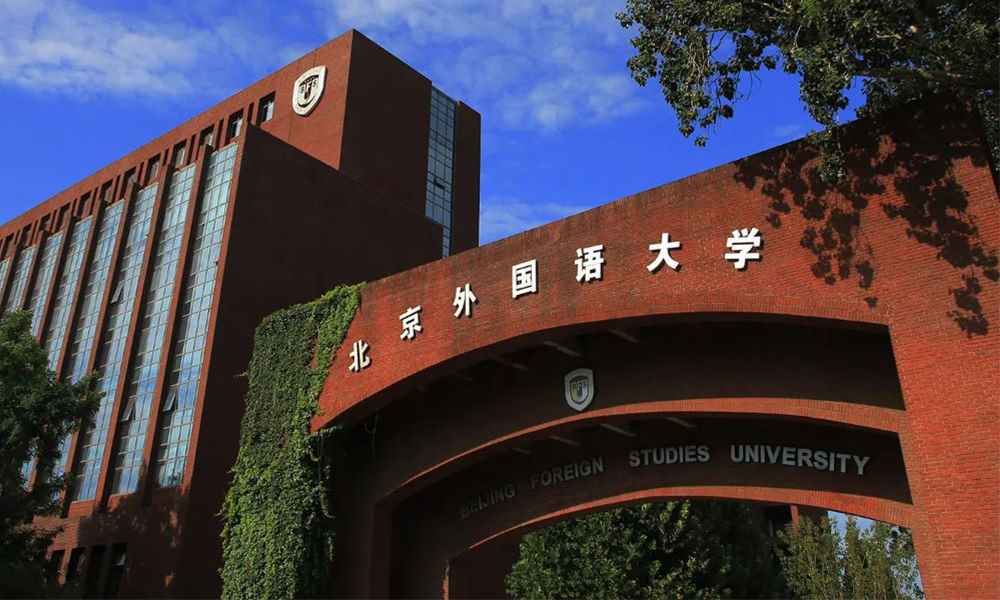
Beijing Foreign Studies University, or BFSU, located on North Xisanhuan Road in Haidian district, Beijing, is one of China’s leading universities under the direct administration of the Ministry of Education (MOE). It is listed under Project 211, Project 985’s Innovation Platform and the first round of the Double First-Class Project of China.
In 1941, the Russian Language Team in the Third Branch of the Chinese People’s Anti-Japanese Military and Political College was established. It was later renamed the Foreign Languages School of the Central Military Commission under the direct leadership of the Central Committee of the Communist Party of China. After the founding of the People’s Republic of China, the school was administered by the Ministry of Foreign Affairs. It was renamed the Beijing Foreign Languages Institute in 1954 and merged with the Beijing Russian Institute in 1959. Since 1980, the institute has been directly administered by the MOE. In 1994, it took on its current name, Beijing Foreign Studies University.
Today, BFSU teaches 101 foreign languages. It houses China's largest non-general language teaching cluster that offers courses in some less commonly taught European, Asian and African languages, as the first of the MOE's special teaching programs. While best known for its excellence in foreign languages and literature, BFSU has also launched programs in fields such as humanities, law, economics, management and education. It now offers courses in languages including (in chronological order) Russian, English, French, German, Spanish, Polish, Czech, Romanian, Japanese, Arabic, Cambodian, Lao, Sinhalese, Malay, Swedish, Portuguese, Hungarian, Albanian, Bulgarian, Swahili, Burmese, Indonesian, Italian, Croatian, Serbian, Hausa, Vietnamese, Thai, Turkish, Korean, Slovak, Finnish, Ukrainian, Dutch, Norwegian, Icelandic, Danish, Greek, Filipino, Hindi, Urdu, Hebrew, Persian, Slovenian, Estonian, Latvian, Lithuanian, Irish, Maltese, Bengali, Kazakh, Uzbek, Latin, Zulu, Kyrgyz, Pashto, Sanskrit, Pali, Amharic, Nepali, Somali, Tamil, Turkmen, Català, Yoruba, Mongolian, Armenian, Malagasy, Georgian, Azerbaijani, Afrikaans, Macedonian, Tajik, Tswana, Ndebele, Comorian, Creole, Shona, Tigrinya, Belarusian, Maori, Tongan, Samoan, Kurdish, Bislama, Dari, Tetum, Dhivehi, Fijian, Cook Islands Maori, Kirundi, Luxembourgish, Kinyarwanda, Niuean, Tok Pisin, Chewa, Sesotho, Sango, Tamazight, Javanese and Punjabi. To better serve China’s diplomatic efforts, it teaches the official languages of the 183 countries that have established diplomatic relations with China.
BFSU has schools, departments and centers dedicated to teaching and research, including some newly established in recent years. That group includes a teaching materials department, the first of its kind in domestic universities, the School of International Organizations, the Graduate School of Education, the BFSU Artificial Intelligence and Human Languages Lab (BFSU•AI) and the BFSU Research Centre for Country-Specific Translation and Interpretation Capacity. Furthermore, the School of Asian and African Studies was restructured into two independent schools – the School of Asian Studies and the School of African Studies. With global languages, global culture and global governance as its strategic priorities, the university has initiated the establishment of the Global Alliance of Foreign Studies Universities, the Consortium for Country and Area Studies and the Chinese Consortium for Country and Area Studies.
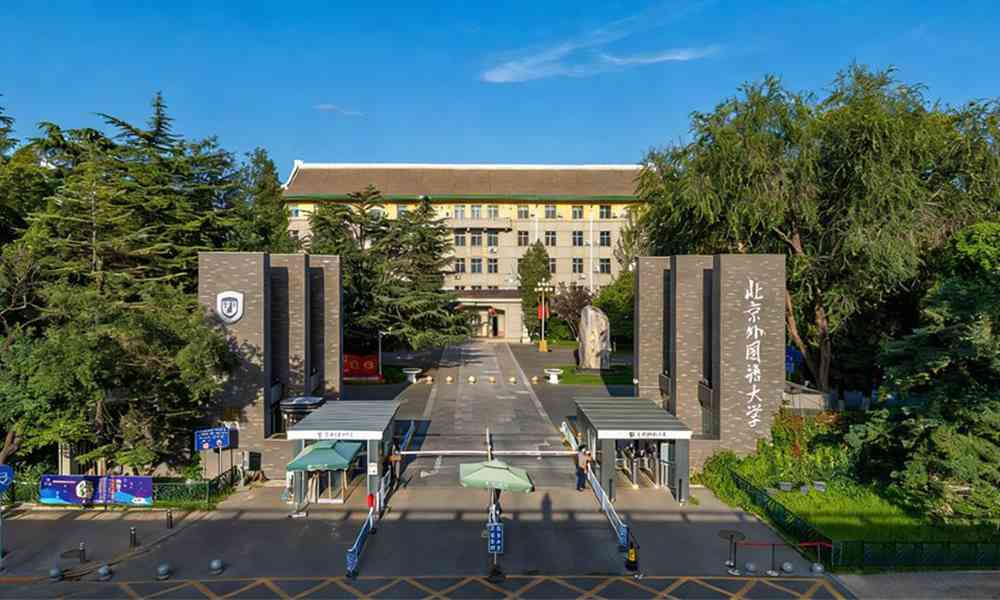
BFSU has 54 research bases at national, provincial and ministerial levels, including one key research center on humanities and social sciences under the MOE (the National Research Centre for Foreign Language Education), one cultivation laboratory on philosophy and social sciences under the MOE / cultivation development project under the MOE Engineering Research Center (the BFSU•AI), one research-oriented base under the State Language Commission (the National Research Centre for State Language Capacity), one national key research base for textbook development (the Research Base for Foreign Language Textbooks in Primary, Secondary and Higher Education), one interdisciplinary innovation platform of the international organization, country and area studies and international communication joint research institutes under the MOE / research base for community for the Chinese nation under the National Ethnic Affairs Commission (the Academy of Regional and Global Governance), four cultivation bases for regional and country studies under the MOE (the Center for Central and Eastern European Studies, the Center for Japanese Studies, the British Studies Center and the Canadian Studies Center), 37 centers for country and regional studies registered with the MOE and three research centers for people-to-people exchanges under the MOE (the China-Indonesia Research Center for People-to-People Exchanges, the China-France Research Center for People-to-People Exchanges and the China-Germany Research Center for People-to-People Exchanges). The university also has one Beijing municipal key research base for philosophy and social sciences and one Beijing municipal research base for managing education by law. BFSU was listed as one of the first national language promotion bases and Beijing municipal research centers and bases of Xi Jinping Thought on Socialism with Chinese Characteristics for a New Era and named the collaborative innovation center for theoretical research on socialism with Chinese characteristics among Beijing universities.
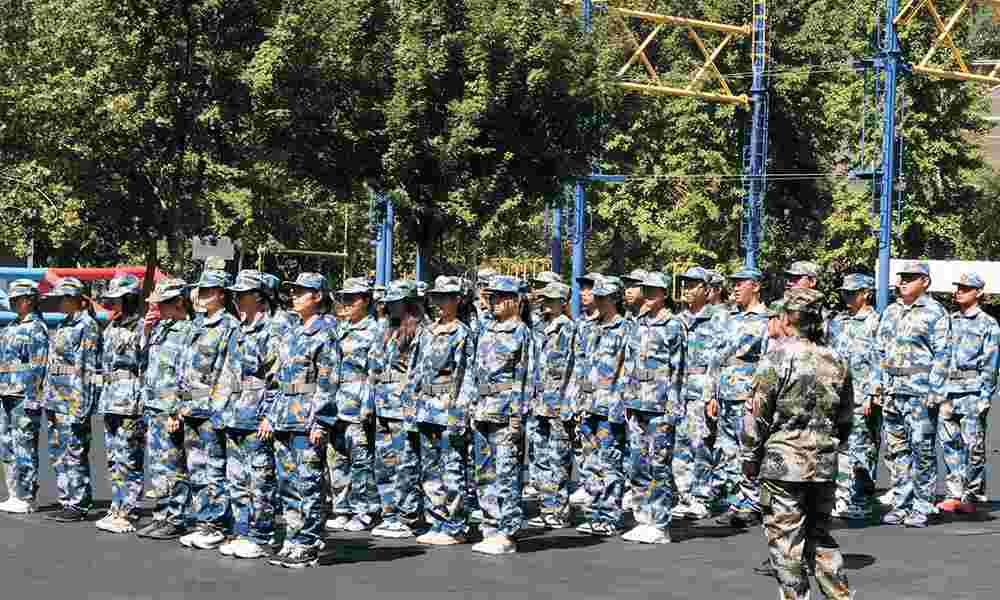
BFSU publishes five CSSCI source journals (Foreign Language Teaching and Research, Foreign Literature, International Forum, Foreign Language Education in China and International Sinology), one CSSCI extended edition source journal (Russian in China), several CSSCI source journal series (including Japanese Studies and Journal of Language Policy and Language Planning), seven other Chinese academic journals and 13 other multilingual journals (including ESCI-indexed English journal Chinese Journal of Applied Linguistics and Scopus-indexed English journals Journal of World Languages and Interpreting and Society: An Interdisciplinary Journal). In addition, the university runs the Foreign Language Teaching and Research Press (FLTRP), the largest publishing house in China for foreign language books, audio-visual products and digital products.
BFSU offers 122 undergraduate programs, 46 of which are exclusive to the university. In addition, 54 programs are designated as national first-class undergraduate major construction sites and 18 are provincial first-class undergraduate major construction sites. The "BFSU Model for Cultivating Multilingual Global Competence" was awarded first prize in the National Teaching Achievement Award in 2022.
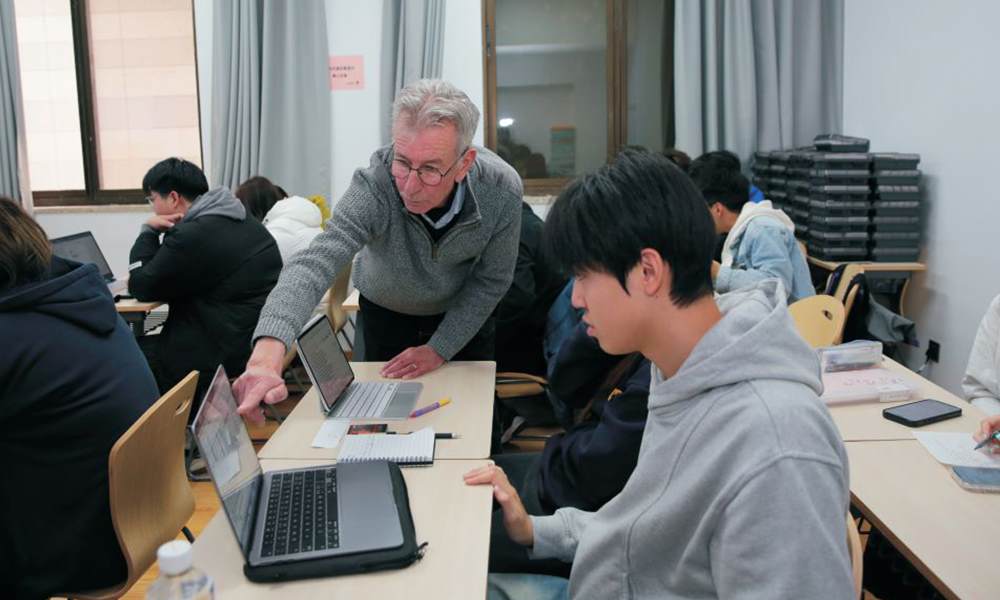
At present, BFSU continues to pursue development through strengthening talent training, promoting academic excellence and building a global presence, aiming to establish itself as an international, distinctive, high-level and comprehensive world-class foreign language university. With the mission of bridging China and the world through languages and supporting all people by upholding truth and justice, the university strives to cultivate more well-rounded talents with patriotism, a global vision and professional skills. These efforts are aimed at making new and greater contributions to helping China better engage with the world and helping the world better understand China.
Our Newsletter
Subscribe to our mailing list to get the updates toyour email inbox.
Contact Us
Phone:+65 6018 8899
Email:ssscedu01@gmail.com
Add: 709 ANG MO KIO AVENUE 8#01-2591 SINGAPORE(560709)
Open hours: 8.00-18.00 Mon-Fri
Copyright © 2026 Singapore Study Abroad Service Center All Rights Reserved. ICP:蜀ICP备1002222号